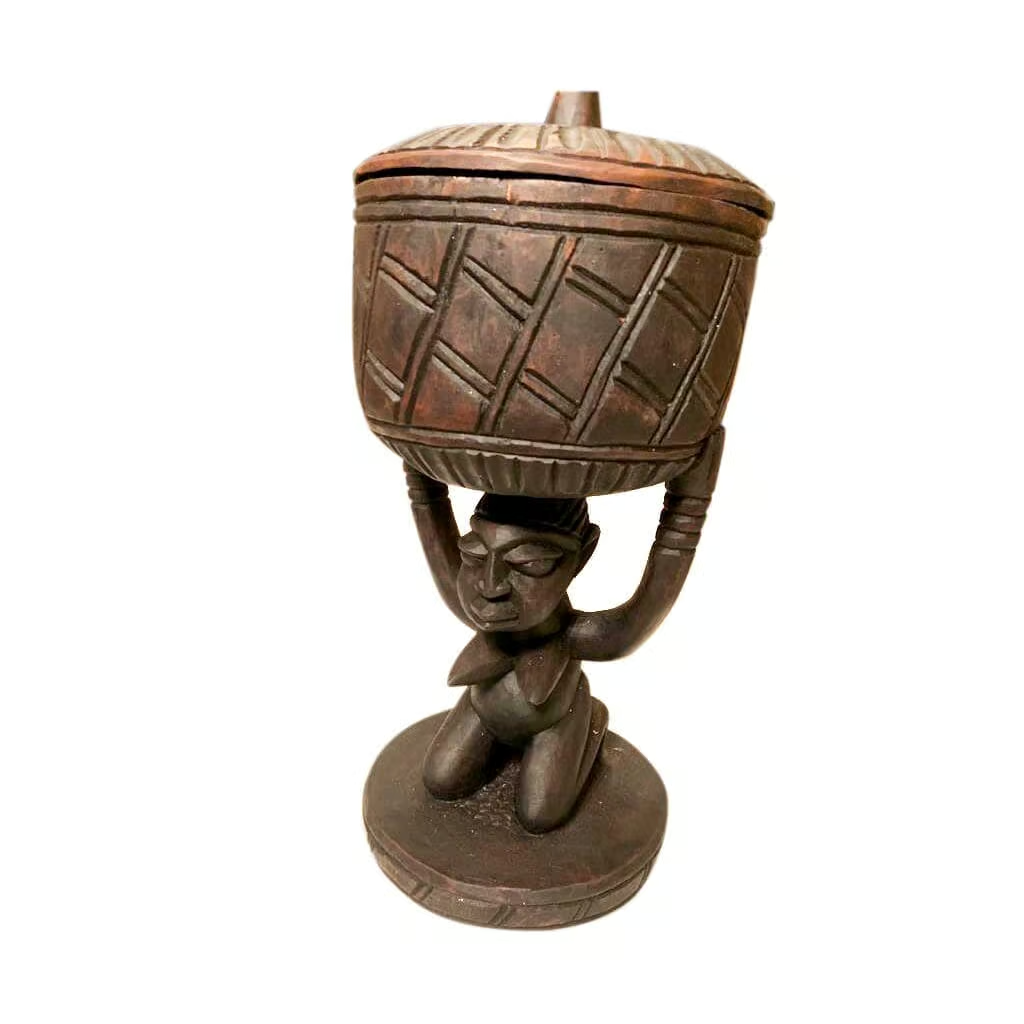
There is a market in fakes. There has been for a long time. The market in genuine Yorùbá ceremonial and ritual objects supports several thousand serious artisans across southwestern Nigeria, the Bénin border region, and the diaspora workshops in Bahia and Havana; the market in objects made for the casual tourist trade — superficially Yorùbá in style, executed in the cheapest possible materials, untraceable to any actual lineage of practice — is at least as large and substantially more visible.
This guide is for the practitioner or serious collector who wants to acquire objects of real quality, supports the artisans who make them, and avoids both the fakes and (just as importantly) the real objects that have been wrongly stripped from their context. It is not a comprehensive treatise. It is a starting orientation written by someone who has spent twenty-five years buying carefully and making roughly the standard share of mistakes.
## What Counts as Authentic
The word “authentic” is doing a lot of work in any conversation about cultural objects, and it is worth being precise about what it can and cannot mean.
For ritual objects in particular — the consecrated containers, the ceremonial regalia, the divination implements — authenticity has at least two distinct senses, and the senses can come apart.
The first sense is *craftsmanship authenticity*: the object is made by a Yorùbá artisan working in a traditional technique, in materials that are appropriate to the form, with the skill that distinguishes serious work from casual work. By this measure, authenticity is a property of the object itself.
The second sense is *contextual authenticity*: the object has been made for use in (or has been used in) actual ritual practice; it carries, in some cases, consecration from such use. By this measure, authenticity is a property of the object’s history.
A ceremonial sash made by a senior beader in Òṣogbo to be worn by a particular initiate at her *kariocha* and subsequently retired from active use has both kinds of authenticity. A nicely-made beaded sash bought in a Lagos market and intended from manufacture for sale to international buyers has only the first kind. Both are legitimate categories of object; one should not be passed off as the other.
A third category — objects of the first quality of craftsmanship, made specifically for the international market by serious artisans, sold openly as such — is the right category for most international collectors and for most diaspora practitioners building shrines outside West Africa. The artisans who make these objects are doing serious work; the market sustains them; the objects themselves can be exquisite.

## The Materials Test
Honest materials reveal themselves under examination. Casual materials reveal themselves equally clearly to a buyer who knows what to look for.
For beadwork: glass seed beads should have visible variation — slight differences in size and colour saturation — that mark them as Czech or Italian seed beads sourced through Lagos markets. Plastic beads have an unnaturally uniform appearance and a characteristic light weight. Genuine coral has a coarse interior structure visible at the cut surface and a soft warmth to the touch; dyed bone or plastic substitutes are colder and have either no interior structure or a manufactured one. Cowries should be naturally weathered with visible mineral variation; if the cowries on a piece all look identical, suspect manufactured replicas.
For wood carvings: the standard Yorùbá ritual carving woods are *ìrókò* (a heavy hardwood that ages dark and shows distinctive grain), *ọmọ* (lighter, with finer grain, often used for divination trays), and *ọṣẹ́* (used for the staff of Ṣàngó in particular). Soft tropical woods that are easy to carve but not traditional — luan, basswood — are common in tourist-grade pieces. Weight is a useful test; ìrókò pieces feel substantially heavier than their visible volume suggests.
For metalwork: the iron tools and staves of Ògún are traditionally hand-forged; the marks of the smith’s hammer are visible on a serious piece. Cast or stamped imitations have a uniform finish that genuine forge work does not.
For textile: hand-dyed indigo (àdìrẹ ẹlẹ́kọ or alábẹ́rẹ̀) shows the slight irregularities of starch-resist or thread-resist work, with depth of colour that printed cotton cannot match. The cloth itself should feel substantial; tourist-grade printed knock-offs are visibly lighter weight.
## The Provenance Test
Beyond the materials, the question is who made it.
Serious Yorùbá artisans, in West Africa or in the diaspora, are usually known to the network of priests and initiates within their region. A buyer who is part of a house — Òrìṣà Spiritual Assembly chapter, Cuban casa, Brazilian terreiro — should ask their senior priests for introductions to artisans the house has worked with. This is the most reliable route.
For buyers outside the network, a small number of named workshops have built international reputations through long-term reliable work and are accessible by introduction. The Adúkẹ́ workshop in Òṣogbo and the Ọládìpúpọ̀ family workshop in Ìbàdàn are two of the better known for beadwork; the carvings out of the Òṣogbo art school carry the lineage of Susanne Wenger’s collaborators and remain among the finest contemporary Yorùbá carving anywhere. In Bahia, the Mestre Didi atelier and its inheritors continue the tradition of Candomblé ritual carving at the highest level.
Avoid: pieces sold without provenance through online marketplaces with no Yorùbá representation; pieces presented as “antique” with no explanation of how they came to be available for sale (the antique trade in Yorùbá ritual objects is heavily implicated in the post-colonial removal of consecrated objects from active shrines, which is a problem that this magazine intends to write about at length in a future issue); pieces sold at prices that are clearly disproportionate to the quality of the work either way (suspiciously cheap or suspiciously expensive both warrant explanation).

## Price Bands, Roughly
Honest 2026 price ranges for serious work, as a rough orientation:
A single-strand initiation bead set, made by a serious workshop in the appropriate Òrìṣà colours: forty to one hundred and twenty US dollars depending on the workshop and the materials.
A ceremonial sash with significant beadwork, including the deity’s name spelled in seed beads: three hundred to twelve hundred dollars.
A small Yorùbá carved figure (a divination tray, a small Olúmèyè, a staff of Èṣù) of serious workshop quality: four hundred to two thousand dollars.
A full beaded crown of the kind appropriate for an Ọba: ten thousand dollars and up; serious commissions often run to twenty-five or thirty thousand.
A ìrùkẹ̀rẹ̀ with substantial beaded handle of the sort that appears with this article: two hundred to seven hundred dollars depending on the beadwork’s complexity.
These are not bargains. They are honest prices for serious work that takes weeks or months of skilled labour to complete. Cheap versions of any of these objects can be had; they are not the same objects.
## What Not to Buy
The single most important guidance in this entire article: do not buy consecrated ritual objects from sources that cannot account for how the objects came to be available for sale.
Consecrated Òrìṣà objects — the actual *sopera* of an initiated *santero*, the staffs and tools that have been the active possession of a working shrine, the ceremonial regalia that has belonged to a specific named priest — should not be on the open market under almost any circumstance. The legitimate routes by which such objects can change hands are limited and tightly controlled within the relevant traditions. A piece appearing on the international art market with no clear provenance, presented as “shrine art” or “ritual object,” should be assumed to have been improperly removed from its context.
This is a serious matter for diaspora practitioners in particular. To install a stranger’s consecrated object in one’s own shrine, without the proper transferring rituals, is to take on responsibilities one is not in a position to discharge. The object will neither protect nor serve. It will, at best, sit silently. At worst — and the elders of the tradition take this with full seriousness — it will create complications that require substantial work to resolve.
If you are uncertain about a piece’s history, ask. If the seller cannot answer, do not buy. If you have already bought a piece whose history is unclear, contact a senior priest in your tradition for guidance about how to handle it appropriately.
## Where to Begin
For readers new to the question of acquiring ritual objects: begin small and through your own house if you have one. A single set of initiation beads in your Òrìṣà’s colour, made for you by an artisan introduced by your own senior priests, is the right beginning. Build from there as your knowledge and your relationships deepen.
The market in serious Yorùbá ceremonial and ritual objects is large enough to support both the artisans and the practitioners. It depends, ultimately, on buyers who take the trouble to learn what they are buying.
This magazine will, in future issues, profile specific workshops in West Africa and the diaspora at length. Recommendations from readers about artisans we should visit are welcome through the editorial address.