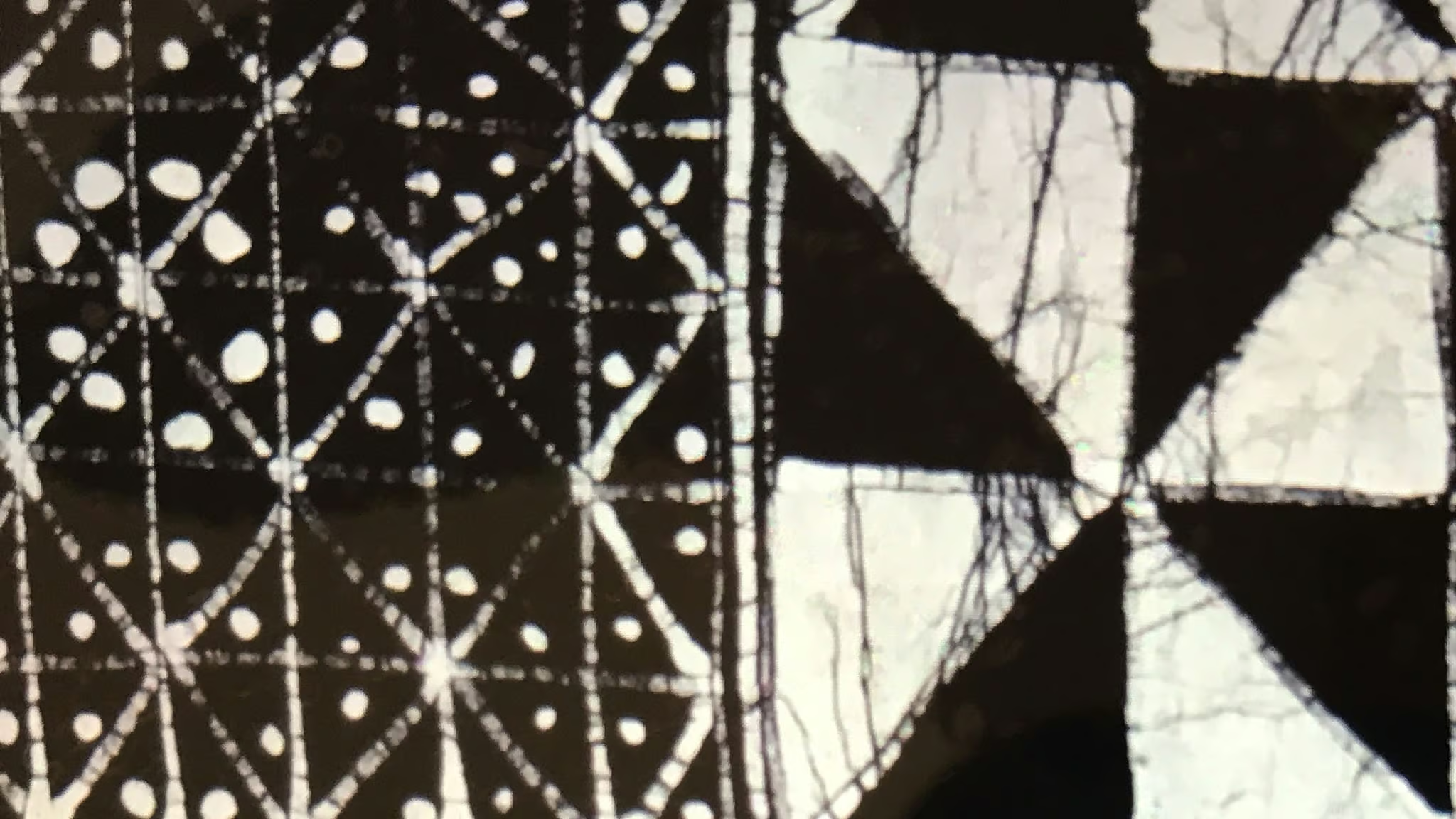
The first thing to understand about àdìrẹ is that it is the product of three distinct trades, none of which is dyeing.
The dye itself comes from elú — the indigo plant, *Lonchocarpus cyanescens*, which grows wild across southwestern Nigeria and is cultivated for the cloth trade in pockets of Òṣun and Ọ̀yọ́ states. The harvested leaves are pounded, formed into balls, and fermented for between three days and three weeks in a pot of well water and the alkaline ash of certain hardwoods. The chemistry is exacting; an experienced dyer can tell from the colour of the foam on the surface of the pot whether the bath is ready.
The cloth is woven separately, almost always elsewhere — until the twentieth century, white cotton cloth came down from the savannah weaving regions north of Yorùbáland; in the modern era, it is more commonly imported white cotton (the famous *bùbá* cotton) from textile mills in India and Pakistan, traded into Lagos and on to the dye centres of Abẹ́òkúta and Ìbàdàn.
The pattern — and this is the part that makes àdìrẹ specifically Yorùbá — is the work of the resist-makers, who are almost always women, working in family compounds, applying starch paste with chicken feathers or stencilling raffia binding by hand to the cloth before the dyer ever sees it. The pattern is what the dye does *not* reach.
## Three Techniques, One Tradition
Three techniques dominate. *Àdìrẹ ẹlẹ́kọ* uses cassava starch, painted onto the cloth with a feather or a calabash-stem brush, to resist the dye in fine line work. The patterns can be astonishingly intricate; the *ìbàdàndùn* design, named for the city of Ìbàdàn, includes recognisable images of tortoises, mudfish, the heads of leopards, the conical roofs of palace buildings, and short Yorùbá inscriptions. Reading an *ẹlẹ́kọ* cloth is the same kind of activity as reading a beaded sash.
*Àdìrẹ alábẹ́rẹ̀* uses raffia thread, sewn through the cloth in patterns and pulled tight before dyeing. The thread keeps the dye out; when the thread is removed after dyeing, the resist pattern emerges in white against the indigo ground. This is the technique that produces the small concentric ring patterns most often associated with àdìrẹ in the international market.
*Àdìrẹ olójú-méjì* — “two-faced àdìrẹ” — uses metal stencils, often cut from sheet roofing zinc, to apply the starch paste in repeating geometric patterns. This is the most recent of the three techniques, dating to the early twentieth century, and accounts for most àdìrẹ production today.
## What the Pattern Means
The patterns are not abstract. *Olókun* (named for the Òrìṣà of the deep sea) carries wave forms and reference to the riches of the ocean floor. *Ìbàdàndùn* — literally “Ìbàdàn is sweet” — is a praise pattern for the city. *Sùnbárẹ́* tells the story of a wealthy woman whose generosity is woven into the cloth.
The cloth is, in this sense, very close to the beadwork tradition: a wearable text, made by women, read by an audience trained to read it. To wear *Olókun* àdìrẹ to the festival of Yemọja is to make a particular kind of statement; to wear it to a funeral is to make a different one.
## The Decline and the Revival
The historical pressure on àdìrẹ was real. The post-war introduction of cheap printed cotton — the so-called *Ankara* cloth, manufactured for the West African market by Vlisco in the Netherlands and others — undercut the price of àdìrẹ and made it, by the 1970s, a marginal trade. Many of the Abẹ́òkúta dye-yards closed. The chemistry was nearly forgotten in some compounds.
What rescued àdìrẹ was a combination of three forces. The first was the persistence of the older women who never stopped dyeing — the Adúkẹ́ Adébáyọ̀ and Ṣehinde Adébánjọ generations who kept the indigo pots alive through the lean years.1 The second was the rise, in the 1990s, of Nigerian and diaspora designers who recognised àdìrẹ as a luxury textile in its own right and began commissioning new work for fashion runways. Lisa Folawiyo, Bibi Borha, and the late Nike Davies-Okundaye are the names most associated with this revival in international visibility.
The third force is the renaissance itself. Devotees of the Òrìṣà — particularly devotees of Yemọja and Olókun, both of whom are appropriately dressed in indigo — have driven steady demand for ritual àdìrẹ for the better part of a decade. A festival shawl, an initiation cloth, a wrap for a shrine — these are not orders that fluctuate with fashion cycles.
## What to Look For
Honest indigo is not navy. It has a depth that printed cloth cannot match — a slight purple in the highlights, a slight green in the shadows, a tendency to *rub off* slightly on contact when new (a feature, not a defect; the cloth ages into its colour over years of wear).
A starch-resist pattern reveals itself by its soft edges where the paste began to fail; a stencil pattern by its mechanical regularity. Hand-sewn raffia work shows the small variations of human eye and human hand.
The price of a serious àdìrẹ piece — five yards, hand-stencilled or hand-painted, naturally dyed — sits today between forty and a hundred and twenty US dollars depending on the workshop, the design, and the depth of the dye. A stencilled cloth from a serious dyer is one of the great bargains of contemporary textile art.
The indigo pots in Abẹ́òkúta are full again. The pattern continues to be made.